Thursday, October 19, 2017

What if I told you, that guns aren't the point of the 2nd Amendment? To Keep and Bear Arms Across Time - pt1

What if I told you, that guns aren't the point of the 2nd Amendment? Heads would be exploding in bi-partisan living color, right? Well, that's what I'm saying: Guns aren't the point of the 2nd Amendment (... 3... 2... 1...BOOM!). And while that will cause heads on both sides of the aisle to explode, they will do so for very different reasons. The Right side will explode, because they'd assume that such a statement intends to weaken, and/or limit our access to guns - which is the opposite meaning, purpose, and affect which that statement would have. The Left side (and not a few on 'The Right') - those who get the tactical point of their spin - will explode because they'd realize that such a statement, if widely understood and adopted, would not only lead to the loss of decades of their hard fought limitations upon arms, but would also explode their primary tool for making those restrictions: equating Arms, with Guns.

You see, despite the fact that firearms are the most effective, efficient, practical means with which to keep and bear arms, they are, as that simple fact implies, not the actual point of the 2nd Amendment, but only one means of our carrying out what is protected by that amendment. Despite what often seems to be the best efforts of those on all sides, the 2nd Amendment is not primarily about gun rights - in fact there is no such thing as 'gun rights'. Nope. Not. Things, of course, do not have rights, but by claiming a right to things, it eventually eliminates all rights, because it means that someone, somewhere, is obligated to supply what others have claimed a right to, whether they want to, or not - that's not how rights work! BTW, that's the same strategy behind demands that 'Healthcare' be treated as a 'Right'.

What the 2nd Amendment is all about, is securing the right of each individual to be able to act in the defense of their community, persons, property and interests, by freely choosing the personal arms which in their judgment is best suited to that task. That's possible, because the 2nd Amendment assures We The People, that the government will neither infringe upon those actions we deem necessary to take, nor will it make any law that would come between ourselves and those arms we may choose from in order to act.

With that in mind, take note of the word 'Arms' in the language of the 2nd Amendment :
'...the right of the people to keep and bear Arms, shall not be infringed.'

And no, the 2nd Amdt is not about 'bearing arms against foreign militias'
If you keep in mind that this amendment was written during a time when 'gentlemen' still wore swords at times, and occasionally still used them, it becomes less surprising that the term refers to the general category of Arms,

Sunday, September 17, 2017

The Constitution at 230 years old - for Patriots, Protesters, and even Rioters

[Re-posting this date adjusted post from last year, on what is now the 230th anniversary of our Constitution, because it asks those few questions that are really worth asking ourselves today. And especially after two days of rioting in St.Louis, supposedly over 'Justice!', it's worth asking yourself today, 

  • What do you think of the Constitution, and why do you think that? 

Not which favorite catch phrases come so readily to mind, or repeating what someone else wrote, or said, but what do You think, and why do you think it? You might even find a few points that you've never thought upon for yourself. 

Hard to imagine a better activity for the day.]


Today marks the completion of what both Patriot and Protester, knowingly or not, are unified in referencing. What was signed as completed upon this day, two hundred and thirty years ago, September 17th, 1787, by thirty-nine of the fifty-five Framers, was the Constitution of the United States of America, and whether you stand in respect for, or disrespectfully turn away from, the Flag, the National Anthem or the Pledge of Allegiance, you do so in reference to that document which is the oldest existing instrument of its kind, still in operation.

Why?

Is it simply a list of rules for governing by? Is it nothing more than a favorite fossil of 'white people'? A document of oppression? Frederick Douglass once thought so, but because he was a thinker in order to understand what was true, he didn't stop with answers that were given him by others, but continued on thinking upon the matter, and discovered the Truth which such vile falsehoods seek to smother and erase.

But today I'm really not much concerned with your answers to those 'points', but am only interested in whether or not you are familiar with the ideas, principles and purposes which animated the writing of it - are you? And if not... what worth can your opinion - pro or con - have for me, or for anyone else?

Whether you mouth its praises, or make showy protests against it, without understanding what it is

Friday, September 15, 2017

Justice follows from a judicial process, not a mob's demands.

Quick note regarding the verdict in the latest "Trial of the Day": Unless you can point to credible reasons to suspect that established procedures weren't followed, or that there was improper influence involved, jury tampering, bribery, etc, I'm highly unlikely to be following or to give a rip about the "Trial of the Day" that you are so worked up about.


We have a judicial system with established procedures that are designed to test, admit and present evidence and arguments for, and against, the person or persons charged with a crime, and assuming that system was followed and applied, what results from that, is what, in our judicial system, constitutes a 'fair trial'.

In our system of justice, the person or persons charged, are considered innocent, in regards to the Law, until proven guilty. That means, that the best possible methods of rendering a Just decision by those who were not there, has been followed, and we cannot justly do any better.

If you want to assert that you didn't like the verdict, and you want to demand that your biased preferences should take precedence over a system such as ours, then you are advocating for the passion driven, unreasoning, use of force, to appease the sensibilities of the aggrieved and the angry. There is no possibility of Justice in such a system as that, and that approach is nothing but a leap backwards in time, to lynch mobs and barbarity.

If you view a single snippet of a statement, and based upon that alone, judge that "This is Not Justice!", then what you are demanding, is not justice, but an end to the possibility of Justice, you are advocating savagery, and in that respect: you disgust me.

Monday, September 11, 2017

Copying The 9/11 Copybook Heading

[A repost from 09/11/2012] There's no doubt that we will remember 9/11 for quite some time to come, but what we remember and why, is far less certain.

More than remembering where I was 11 years ago, I remember how we got there. By denying the reality of what we faced in the World Trade Center bombing, the hijacking of airliners and cruise ships, the bombing of our interests around the world and of the USS Cole, by refusing to deal with evil as is required, evil strolled up and gave us a hug on 9/11, 11 years ago.

Have we learned the lesson? I don't even need to turn on the News to know that the answer is: Not even close.

The cost has been, and no doubt will again be, the likes of 9/11, as the Gods of the Copybook Headings limp up to explain it once more... reasoning with those who are unreasonable, giving measured responses in reply to savagery, enables the evil to harm the good. Remember this 9/11, that 'measured responses' are why those who attacked us on 9/11, 11 years ago, were still alive and able to attack us - the fruition of a decade worth of 'measured responses'.

Leftists deny the existence of Evil, and 'Conservatives' deny the necessity of dealing with evil as the evil that they are. Fearing that Just retribution brings us 'down to their level', they insist on 'reasonable' and 'measured' responses, blind to the fact that such measures extend a hand up to evil, which it will use to reach up and hammer you in the face - the face they never could have reached without the aid of those 'measured responses'.

Conservatives like O'Reilly are the reason why I'm uncomfortable calling myself a Conservative. For

Friday, August 18, 2017

Toppling History - You do not change the future by ignoring the past, you only bring it back to life, behind your back

For those of you out there who are honestly thinking over your opinion on the issue of removing statues relating to the Confederacy, or slavery, etc., consider what kind of history, and history lessons, we would be teaching to our present and future selves, by removing those names and statues that are unpleasant reminders of who We The People once were, and may still be.

If we were to look into the histories of other peoples, what historical lessons do you suppose we would find, in peoples who've tried to eliminate their current problems, which they see as having been created by who they'd once been (and might, to some extent, still be), by ignoring or removing any and all reminders of their present and past faults & failings? If Stalin, the USSR and George Orwell's 1984 didn't immediately come to mind... then maybe put the matter into more personal terms: what do you suppose a psychologist might tell a patient, who's attempting to repress their unpleasant memories? Does denying and repressing your failings sound like a psychologically healthy idea? What do you suppose will be accomplished, by an entire nation of individuals, frenziedly tearing down, and kicking(!), those statues, which remind them of their past and present faults and failings?

You do not change the future by ignoring the past, you only bring it back to life, behind your back.

I'll grant you, it might aid the Democrat party, to not have so many reminders of what the Democrat party stood for, before and after, the Civil War, and publicly well into the 20th Century, but I'm doubtful if doing that favor for them, will have much benefit for the rest of us.

I have no love for the figures that had first been named, Teddy Roosevelt, Roger B. Taney, or any of the figures of the Confederacy. While I recognize that TR was a 'larger than life' figure, I despise him

I don't give a damn who or what you oppose, I care about what you support

My sadly unpopular opinion:
I don't give a damn who or what you oppose, I care about what you support.

Do you support the constitutional rule of law, dedicated to upholding and defending every one's individual rights, without regard to qualifiers such as race, creed, gender, wealth, etc?
If so, I'm with you. 
On the other hand, if you oppose one bad 'ism, while supporting another that reduces or eliminates the equal protections of another's individual rights, your views are NOT what I think of as 'good', and I do not see you as being on 'my' side.

Wednesday, August 16, 2017

"We are Americans first" - Really? The first step towards resolving a problem, is admitting you have one.

I saw President Trump's statement on the rioting in Virginia, and it was as good and as to the point, as can be expected. But unfortunately, it rested upon the line
'We are Americans first'
They say that the first step towards resolving a problem, is admitting that you have one. Well, we have a problem, and the problem is that I fear that phrase is not only no longer true, but is perilously close to having no meaning at all. Why? Because in order to truthfully say that we are Americans first, a person has to first be able to say:
'American'
, with some understanding of the word that's coming out of their mouth. From what I can see, in looking at what other words are coming out of people's mouths, I'm seeing very little to indicate that most of us do know the meaning of American, beyond the shallow legalistic sense of having been born within the geographic borders of the United States... and if that's the extent of your understanding, when you come up against racist organizations advocating for 'America'... well... do you see the problem?


Sure, you're given a legal status by being born within our borders, but you do not, in any meaningful sense, become an American by such means alone, at least not in a way that is any different from how a person becomes a German or a Russian, i.e. by being born of parents on American soil - aka: by 'blood and soil', which, BTW, also happens to be the traditional rallying cry of fascists.

Now do you see the problem there?

Being an American that understands the meaning of that word, American, requires understanding that the meaning of that word, is not gained by means of osmosis through your ancestors blood, or through the soil that your mother gave birth to you upon, which were features and events which you yourself had absolutely no hand in, knowledge of, or choice in. If that and your "[insert your favorite color here] Pride!", are the extent of your claim to being an American, then you are not, in that more meaningful sense, an American.

To understand what it does mean to be an American, means understanding, and accepting as best you can, the fruit of that particular set of ideas that were expressed in our Declaration of Independence, especially, that:
"...We hold these truths to be self-evident, that all men are created equal, that they are endowed by their Creator with certain unalienable rights, that among these are life, liberty and the pursuit of happiness. That to secure these rights, governments are instituted among men, deriving their just powers from the consent of the governed...."
Those phrases of our Declaration, have deep philosophical meaning, which gives voice to the meaning and purpose of America, and yet, as Jefferson later wrote to a friend, they weren't meant to be especially impressive, or 'deep', or as an exercise in edgy literary or philosophical virtue signaling, but simply as expressions of something much more commonly profound:
"Neither aiming at originality of principle or sentiment, nor yet copied from any particular and previous writing, it was intended to be an expression of the American mind, and to give to that expression the proper tone and spirit called for by the occasion. All its authority rests then on the harmonizing sentiments of the day, whether expressed in conversation, in letters, printed essays, or in the elementary books of public right, as Aristotle, Cicero, Locke, Sidney, &c..."
If those ideas and 'harmonizing sentiments' or the 'elementary books of public right' are foreign to you, then you necessarily stand mute before them, making you intellectually, and spiritually, foreign to America, no matter what the legal status of your physical ties to its 'blood and soil' are.

Am I being too harsh in this? If we look about the land today, what evidence do we find for the sentiment that 'We are Americans first'? If we look to Charlottesville, Virginia, for instance, what did we see on display there last weekend? When I look at the center of these heinous events, I'm seeing prime reasons for the fears that I'm talking about, as racist, socialist, anti-American sentiments were on display in abundance, with very few visible examples of those 'Harmonizing Sentiments' which are what made it possible for the contents of our melting pot, to want to see themselves as being "Americans first."

For Instance:

Sunday, August 13, 2017

You are either Pro-Individual Rights for all, or you are all wrong.

If your political ideals do not spring from the deeper philosophical ideals, that all men are created with equal rights, and have equal standing before the law, no matter their race, creed, wealth or gender, then your position is neither right, nor on The Right, and has, and can have no part, in what is good, beautiful and true. Such race based ideals, whether of light or dark pigmentation, are Pro-Regressive, and belong to the dark ages that America was created to help our civilization to rise above.

From President Coolidge's speech on 'The Inspiration of the Declaration of Independence':
"...About the Declaration there is a finality that is exceedingly restful. It is often asserted that the world has made a great deal of progress since 1776, that we have had new thoughts and new experiences which have given us a great advance over the people of that day, and that we may therefore very well discard their conclusions for something more modern. But that reasoning can not be applied to this great charter. If all men are created equal, that is final. If they are endowed with inalienable rights, that is final. If governments derive their just powers from the consent of the governed, that is final. No advance, no progress can be made beyond these propositions. If anyone wishes to deny their truth or their soundness, the only direction in which he can proceed historically is not forward, but backward toward the time when there was no equality, no rights of the individual, no rule of the people. Those who wish to proceed in that direction can not lay claim to progress. They are reactionary. Their ideas are not more modern, but more ancient, than those of the Revolutionary fathers...."
Whether you claim to be of The Left or of The Right, if you find these founding ideals of America to be offensive, then you have no place here, or in the future - you belong to the past.

Move along.

Tuesday, July 18, 2017

GOP to America: If you like your Repeal, you can keep your Repeal


GOP to America: If you like your Repeal, you can keep your Repeal.

Conservatives to GOP in 2018: If you like your Elected Office, you can keep your Elected Office.


Occupants of geographic America: If you like your Liberty, you can keep your Liberty.


The Catch-22 Republic:
"...And for this reason, I said, money and honour have no attraction for them; good men do not wish to be openly demanding payment for governing and so to get the name of hirelings, nor by secretly helping themselves out of the public revenues to get the name of thieves. And not being ambitious they do not care about honour. Wherefore necessity must be laid upon them, and they must be induced to serve from the fear of punishment. And this, as I imagine, is the reason why the forwardness to take office, instead of waiting to be compelled, has been deemed dishonourable. Now the worst part of the punishment is that he who refuses to rule is liable to be ruled by one who is worse than himself. And the fear of this, as I conceive, induces the good to take office, not because they would, but because they cannot help --not under the idea that they are going to have any benefit or enjoyment themselves, but as a necessity, and because they are not able to commit the task of ruling to any one who is better than themselves, or indeed as good. For there is reason to think that if a city were composed entirely of good men, then to avoid office would be as much an object of contention as to obtain office is at present; then we should have plain proof that the true ruler is not meant by nature to regard his own interest, but that of his subjects; and every one who knew this would choose rather to receive a benefit from another than to have the trouble of conferring one. So far am I from agreeing with Thrasymachus that justice is the interest of the stronger. This latter question need not be further discussed at present; but when Thrasymachus says that the life of the unjust is more advantageous than that of the just, his new statement appears to me to be of a far more serious character. Which of us has spoken truly? And which sort of life, Glaucon, do you prefer?..."
Which do you prefer?

What chance do you think there is that you'll get it?

Carry on.

Thursday, July 13, 2017

Dana Loesch & NRA: When the Truth burns, turn up the heat!

For some reason, the Pro-Regressive Left, and the feminists in particular, have been targeting Dana Loesch lately, which... is a 50/50 proposition. If they wanted to get publicity, well, ok, sure. But if they were hoping to look like something other than idiots in doing so... it's hasn't proven to be such a good idea.

More puzzling, is that they are claiming to be a movement that's 'pro-women' and 'anti-violence', while going after Dana, in the company of people who are the most abusive to women (those who are eager to bag, beat, mutilate, deprive them of their rights and otherwise abuse women) for political and religious reasons, and those who'd like nothing more than to see women, and their children, disarmed, even if at the cost of their own lives - to score political points.

But maybe most amazing, is that they accuse Dana of 'violent rhetoric', when, in the case of the NRA video that started it all, she's speaking in front videos of the Pro-Regressive Left's violent, nationwide demonstrations and rioting, as she's calling for meeting their lies and vitriol, not with the violence that they prefer, but with Truth, and yeah, necessarily, the 'clenched fist of truth', and the only way to claim that being hit with the truth is violence, is if it burns them physically (not just mentally).

These groups are led by the likes of Linda Sarsour, who have endorsed jihad, participated in terrorism, and who are especially enthusiastic about using their freedom of speech, to denounce your freedom of speech, with their own vile, racist, mysoginistic and misandrist language (maybe that's what they mean by 'sexual equality'?), in political action groups of hyper-partisan self-segregating women (they refuse to associate with women who disagree with them politically), in order to promote the suffocation of liberty, through your political or religious submission.

Fortunately, Dana is proficient in exercising all of her rights, and has an effective one-two combination of those rights protected under the 1st and 2nd Amendment, that doesn't mince any words:
"To Women’s March organizers Tamika Mallory, Linda Sarsour and Carmen Perez: You don’t get to call me a racist, sexist, bigot, homophobe or xenophobe when a man you look up to and call honorable and hold hands with and take selfies with represents the exact type of bigot you pretend to march against. If you want to stop hate, start with your mentor, Daddy Farrakhan. If you feel you’re “not safe,” go tell Daddy Farrakhan to tone down his divisive, racial rhetoric. Ladies, you have the power to end Daddy Farrakhan’s hate-filled propaganda. Plan a march. I’ll be there. Watch my full commentary on Farrakhan’s Anarchist Angels on NRATV."
Yeah... they're not the smartest bunch of nuts.
Nationwide Protest

If you'd like to watch the fun as their own unreasoning vitriol explodes in their faces, tune in to Data's radio show tomorrow, or catch it in a live simulcast on Facebook.

#NRA2DOJ

Tuesday, July 04, 2017

Remember how dependent our Constitution is, upon our Declaration of Independence, and our understanding of it!

Before getting to my annual reposting of Calvin Coolidges speech on the Inspiration of our Declaration of Independence, it occurs to me that I should maybe point out what is perhaps most remarkable about what its author, Thomas Jefferson, considered to be the least remarkable aspect of it - that he intended the Declaration as an expression of ideas that were familiar and commonly understood, by the majority of Americans, of that time, as Jefferson wrote to a friend in later years, about what it was meant to accomplish:
"Neither aiming at originality of principle or sentiment, nor yet copied from any particular and previous writing, it was intended to be an expression of the American mind, and to give to that expression the proper tone and spirit called for by the occasion. All its authority rests then on the harmonizing sentiments of the day, whether expressed in conversation, in letters, printed essays, or in the elementary books of public right, as Aristotle, Cicero, Locke, Sidney, &c..."
That is why we are unique in the annals of human history, as being a nation founded upon ideas (those twits mouthing on about 'inherent American anti-intellectualism' can kiss my patriotic ass). And those common ideas, and their influence, continued to serve as strong guides for the later creation of our Constitution, can be easily found in even a cursory reading, between the charges of the Declaration of Independence against King George, and their reflection in our Constitution and the amendments to it, and ... "To prove this, let Facts be submitted to a candid World."
"HE has made Judges dependent on his Will alone, for the Tenure of their Offices, and the Amount and Payment of their Salaries."

  • The first three articles of our Constitution, divides Govt into three branches, which prevent any one person or wing from attaining a monopoly of power over the others.
"HE has erected a Multitude of new Offices, and sent hither Swarms of Officers to harrass our People, and eat out their Substance."

  • This is what our Constitution was expressly designed to forbid, which unfortunately is what the pro-regressive Administrative State, was erected upon it to encourage (as was our politically instituted educational system) - proof that Laws that do not live in the hearts and minds of the people, cannot protect them against themselves
"HE has kept among us, in Times of Peace, Standing Armies, without the consent of our Legislatures. HE has affected to render the Military independent of and superior to the Civil Power."

  • Congress has control of organizing and funding the military budget, and while the Executive has command of the military, he can not do much, for long, without the further consent of the people's representatives, and in all ways, the military is under civil control.
"FOR quartering large Bodies of Armed Troops among us"

"FOR protecting them, by a mock Trial, from Punishment for any Murders which they should commit on the Inhabitants of these States"

"FOR cutting off our Trade with all Parts of the World"

"FOR imposing Taxes on us without our Consent:

"FOR depriving us, in many Cases, of the Benefits of Trial by Jury"

, and if you take the time to read both, you will find many, many, more points of harmony between the two.

But enough, onto Calvin Coolidge's speech, and a happy Independence Day to you all!

The Inspiration of the Declaration of Independence
Given in Philadelphia, Pennsylvania on July 5, 1926:

President Calvin Coolidge
We meet to celebrate the birthday of America. The coming of a new life always excites our interest. Although we know in the case of the individual that it has been an infinite repetition reaching back beyond our vision, that only makes it the more wonderful. But how our interest and wonder increase when we behold the miracle of the birth of a new nation. It is to pay our tribute of reverence and respect to those who participated in such a mighty event that we annually observe the fourth day of July. Whatever may have been the impression created by the news which went out from this city on that summer day in 1776, there can be no doubt as to the estimate which is now placed upon it. At the end of 150 years the four corners of the earth unite in coming to Philadelphia as to a holy shrine in grateful acknowledgment of a service so great, which a few inspired men here rendered to humanity, that it is still the preeminent support of free government throughout the world.

Although a century and a half measured in comparison with the length of human
experience is but a short time, yet measured in the life of governments and nations it ranks as a very respectable period. Certainly enough time has elapsed to demonstrate with a great deal of thoroughness the value of our institutions and their dependability as rules for the regulation of human conduct and the advancement of civilization. They have been in existence long enough to become very well seasoned. They have met, and met successfully, the test of experience.

It is not so much then for the purpose of undertaking to proclaim new theories and principles that this annual celebration is maintained, but rather to reaffirm and reestablish those old theories and principles which time and the unerring logic of events have demonstrated to be sound. Amid all the clash of conflicting interests, amid all the welter of partisan politics, every American can turn for solace and consolation to the Declaration of independence and the Constitution of the United States with the assurance and confidence that those two great charters of freedom and justice remain firm and unshaken. Whatever perils appear, whatever dangers threaten, the Nation remains secure in the knowledge that the ultimate application of the law of the land will provide an adequate defense and protection.

It is little wonder that people at home and abroad consider Independence Hall as hallowed ground and revere the Liberty Bell as a sacred relic. That pile of bricks and mortar, that mass of metal, might appear to the uninstructed as only the outgrown meeting place and the shattered bell of a former time, useless now because of more modern conveniences, but to those who know they have become consecrated by the use which men have made of them. They have long been identified with a great cause. They are the framework of a spiritual event. The world looks upon them, because of their associations of one hundred and fifty years ago, as it looks upon the Holy Land because of what took place there nineteen hundred years ago. Through use for a righteous purpose they have become sanctified.

It is not here necessary to examine in detail the causes which led to the American Revolution. In their immediate occasion they were largely economic. The colonists objected to the navigation laws which interfered with their trade, they denied the power of Parliament to impose taxes which they were obliged to pay, and they therefore resisted the royal governors and the royal forces which were sent to secure obedience to these laws. But the conviction is inescapable that a new civilization had come, a new spirit had arisen on this side of the Atlantic more advanced and more developed in its regard for the rights of the individual than that which characterized the Old World. Life in a new and open country had aspirations which could not be realized in any subordinate position. A separate establishment was ultimately inevitable. It had been decreed by the very laws of human nature. Man everywhere has an unconquerable desire to be the master of his own destiny.

We are obliged to conclude that the Declaration of Independence represented the movement of a people. It was not, of course, a movement from the top. Revolutions do not come from that direction. It was not without the support of many of the most respectable people in the Colonies, who were entitled to all the consideration that is given to breeding, education, and possessions. It had the support of another element of great significance and importance to which I shall later refer. But the preponderance of all those who occupied a position which took on the aspect of aristocracy did not approve of the Revolution and held toward it an attitude either of neutrality or open hostility. It was in no sense a rising of the oppressed and downtrodden. It brought no scum to the surface, for the reason that colonial society had developed no scum. The great body of the people were accustomed to privations, but they were free from depravity. If they had poverty, it was not of the hopeless kind that afflicts great cities, but the inspiring kind that marks the spirit of the pioneer. The American Revolution represented the informed and mature convictions of a great mass of independent, liberty-loving, God-fearing people who knew their rights, and possessed the courage to dare to maintain them. The Continental Congress was not only composed of great men, but it represented a great people. While its members did not fail to exercise a remarkable leadership, they were equally observant of their representative capacity. They were industrious in encouraging their constituents to instruct them to support independence. But until such instructions were given they were inclined to withhold action.

While North Carolina has the honor of first authorizing its delegates to concur with other Colonies in declaring independence, it was quickly followed by South Carolina and Georgia, which also gave general instructions broad enough to include such action. But the first instructions which unconditionally directed its delegates to declare for independence came from the great Commonwealth of Virginia. These were immediately followed by Rhode Island and Massachusetts, while the other Colonies, with the exception of New York, soon adopted a like course.

This obedience of the delegates to the wishes of their constituents, which in some cases caused them to modify their previous positions, is a matter of great significance. It reveals an orderly process of government in the first place; but more than that, it demonstrates that the Declaration of Independence was the result of the seasoned and deliberate thought of the dominant portion of the people of the Colonies. Adopted after long discussion and as the result of the duly authorized expression of the preponderance of public opinion, it did not partake of dark intrigue or hidden conspiracy. It was well advised. It had about it nothing of the lawless and disordered nature of a riotous insurrection. It was maintained on a plane which rises above the ordinary conception of rebellion. It was in no sense a radical movement but took on the dignity of a resistance to illegal usurpations. It was conservative and represented the action of the colonists to maintain their constitutional rights which from time immemorial had been guaranteed to them under the law of the land.

When we come to examine the action of the Continental Congress in adopting the Declaration of Independence in the light of what was set out in that great document and in the light of succeeding events, we can not escape the conclusion that it had a much broader and deeper significance than a mere secession of territory and the establishment of a new nation. Events of that nature have been taking place since the dawn of history. One empire after another has arisen, only to crumble away as its constituent parts separated from each other and set up independent governments of their own. Such actions long ago became commonplace. They have occurred too often to hold the attention of the world and command the admiration and reverence of humanity. There is something beyond the establishment of a new nation, great as that event would be, in the Declaration of Independence which has ever since caused it to be regarded as one of the great charters that not only was to liberate America but was everywhere to ennoble humanity.

It was not because it was proposed to establish a new nation, but because it was proposed to establish a nation on new principles, that July 4, 1776, has come to be regarded as one of the greatest days in history. Great ideas do not burst upon the world unannounced. They are reached by a gradual development over a length of time usually proportionate to their importance. This is especially true of the principles laid down in the Declaration of Independence. Three very definite propositions were set out in its preamble regarding the nature of mankind and therefore of government. These were the doctrine that all men are created equal, that they are endowed with certain inalienable rights, and that therefore the source of the just powers of government must be derived from the consent of the governed.

If no one is to be accounted as born into a superior station, if there is to be no ruling class, and if all possess rights which can neither be bartered away nor taken from them by any earthly power, it follows as a matter of course that the practical authority of the Government has to rest on the consent of the governed. While these principles were not altogether new in political action, and were very far from new in political speculation, they had never been assembled before and declared in such a combination. But remarkable as this may be, it is not the chief distinction of the Declaration of Independence. The importance of political speculation is not to be under-estimated, as I shall presently disclose. Until the idea is developed and the plan made there can be no action.

It was the fact that our Declaration of Independence containing these immortal truths was the political action of a duly authorized and constituted representative public body in its sovereign capacity, supported by the force of general opinion and by the armies of Washington already in the field, which makes it the most important civil document in the world. It was not only the principles declared, but the fact that therewith a new nation was born which was to be founded upon those principles and which from that time forth in its development has actually maintained those principles, that makes this pronouncement an incomparable event in the history of government. It was an assertion that a people had arisen determined to make every necessary sacrifice for the support of these truths and by their practical application bring the War of Independence to a successful conclusion and adopt the Constitution of the United States with all that it has meant to civilization.

The idea that the people have a right to choose their own rulers was not new in political history. It was the foundation of every popular attempt to depose an undesirable king. This right was set out with a good deal of detail by the Dutch when as early as July 26, 1581, they declared their independence of Philip of Spain. In their long struggle with the Stuarts the British people asserted the same principles, which finally culminated in the Bill of Rights deposing the last of that house and placing William and Mary on the throne. In each of these cases sovereignty through divine right was displaced by sovereignty through the consent of the people. Running through the same documents, though expressed in different terms, is the clear inference of inalienable rights. But we should search these charters in vain for an assertion of the doctrine of equality. This principle had not before appeared as an official political declaration of any nation. It was profoundly revolutionary. It is one of the corner stones of American institutions.

But if these truths to which the declaration refers have not before been adopted in their combined entirety by national authority, it is a fact that they had been long pondered and often expressed in political speculation. It is generally assumed that French thought had some effect upon our public mind during Revolutionary days. This may have been true. But the principles of our declaration had been under discussion in the Colonies for nearly two generations before the advent of the French political philosophy that characterized the middle of the eighteenth century. In fact, they come from an earlier date. A very positive echo of what the Dutch had done in 1581, and what the English were preparing to do, appears in the assertion of the Rev. Thomas Hooker of Connecticut as early as 1638, when he said in a sermon before the General Court that:
The foundation of authority is laid in the free consent of the people

The choice of public magistrates belongs unto the people by God's own allowance.

This doctrine found wide acceptance among the nonconformist clergy who later made up the Congregational Church. The great apostle of this movement was the Rev. John Wise, of Massachusetts. He was one of the leaders of the revolt against the royal governor Andros in 1687, for which he suffered imprisonment. He was a liberal in ecclesiastical controversies. He appears to have been familiar with the writings of the political scientist, Samuel Pufendorf, who was born in Saxony in 1632. Wise published a treatise, entitled "The Church's Quarrel Espoused," in 1710 which was amplified in another publication in 1717. In it he dealt with the principles of civil government. His works were reprinted in 1772 and have been declared to have been nothing less than a textbook of liberty for our Revolutionary fathers.

While the written word was the foundation, it is apparent that the spoken word was the vehicle for convincing the people. This came with great force and wide range from the successors of Hooker and Wise, It was carried on with a missionary spirit which did not fail to reach the Scotch Irish of North Carolina, showing its influence by significantly making that Colony the first to give instructions to its delegates looking to independence. This preaching reached the neighborhood of Thomas Jefferson, who acknowledged that his "best ideas of democracy" had been secured at church meetings.

That these ideas were prevalent in Virginia is further revealed by the Declaration of Rights, which was prepared by George Mason and presented to the general assembly on May 27, 1776. This document asserted popular sovereignty and inherent natural rights, but confined the doctrine of equality to the assertion that "All men are created equally free and independent". It can scarcely be imagined that Jefferson was unacquainted with what had been done in his own Commonwealth of Virginia when he took up the task of drafting the Declaration of Independence. But these thoughts can very largely be traced back to what John Wise was writing in 1710. He said, "Every man must be acknowledged equal to every man". Again, "The end of all good government is to cultivate humanity and promote the happiness of all and the good of every man in all his rights, his life, liberty, estate, honor, and so forth . . . ." And again, "For as they have a power every man in his natural state, so upon combination they can and do bequeath this power to others and settle it according as their united discretion shall determine". And still again, "Democracy is Christ's government in church and state". Here was the doctrine of equality, popular sovereignty, and the substance of the theory of inalienable rights clearly asserted by Wise at the opening of the eighteenth century, just as we have the principle of the consent of the governed stated by Hooker as early as 1638.

When we take all these circumstances into consideration, it is but natural that the first paragraph of the Declaration of Independence should open with a reference to Nature's God and should close in the final paragraphs with an appeal to the Supreme Judge of the world and an assertion of a firm reliance on Divine Providence. Coming from these sources, having as it did this background, it is no wonder that Samuel Adams could say "The people seem to recognize this resolution as though it were a decree promulgated from heaven."

No one can examine this record and escape the conclusion that in the great outline of its principles the Declaration was the result of the religious teachings of the preceding period. The profound philosophy which Jonathan Edwards applied to theology, the popular preaching of George Whitefield, had aroused the thought and stirred the people of the Colonies in preparation for this great event. No doubt the speculations which had been going on in England, and especially on the Continent, lent their influence to the general sentiment of the times. Of course, the world is always influenced by all the experience and all the thought of the past. But when we come to a contemplation of the immediate conception of the principles of human relationship which went into the Declaration of Independence we are not required to extend our search beyond our own shores. They are found in the texts, the sermons, and the writings of the early colonial clergy who were earnestly undertaking to instruct their congregations in the great mystery of how to live. They preached equality because they believed in the fatherhood of God and the brotherhood of man. They justified freedom by the text that we are all created in the divine image, all partakers of the divine spirit.

Placing every man on a plane where he acknowledged no superiors, where no one possessed any right to rule over him, he must inevitably choose his own rulers through a system of self-government. This was their theory of democracy. In those days such doctrines would scarcely have been permitted to flourish and spread in any other country. This was the purpose which the fathers cherished. In order that they might have freedom to express these thoughts and opportunity to put them into action, whole congregations with their pastors had migrated to the colonies. These great truths were in the air that our people breathed. Whatever else we may say of it, the Declaration of Independence was profoundly American.

If this apprehension of the facts be correct, and the documentary evidence would appear to verify it, then certain conclusions are bound to follow. A spring will cease to flow if its source be dried up; a tree will wither if its roots be destroyed. In its main features the Declaration of Independence is a great spiritual document. It is a declaration not of material but of spiritual conceptions. Equality, liberty, popular sovereignty, the rights of man these are not elements which we can see and touch. They are ideals. They have their source and their roots in the religious convictions. They belong to the unseen world. Unless the faith of the American people in these religious convictions is to endure, the principles of our Declaration will perish. We can not continue to enjoy the result if we neglect and abandon the cause.

We are too prone to overlook another conclusion. Governments do not make ideals, but ideals make governments. This is both historically and logically true. Of course the government can help to sustain ideals and can create institutions through which they can be the better observed, but their source by their very nature is in the people. The people have to bear their own responsibilities. There is no method by which that burden can be shifted to the government. It is not the enactment, but the observance of laws, that creates the character of a nation.

About the Declaration there is a finality that is exceedingly restful. It is often asserted that the world has made a great deal of progress since 1776, that we have had new thoughts and new experiences which have given us a great advance over the people of that day, and that we may therefore very well discard their conclusions for something more modern. But that reasoning can not be applied to this great charter. If all men are created equal, that is final. If they are endowed with inalienable rights, that is final. If governments derive their just powers from the consent of the governed, that is final. No advance, no progress can be made beyond these propositions. If anyone wishes to deny their truth or their soundness, the only direction in which he can proceed historically is not forward, but backward toward the time when there was no equality, no rights of the individual, no rule of the people. Those who wish to proceed in that direction can not lay claim to progress. They are reactionary. Their ideas are not more modern, but more ancient, than those of the Revolutionary fathers.

In the development of its institutions America can fairly claim that it has remained true to the principles which were declared 150 years ago. In all the essentials we have achieved an equality which was never possessed by any other people. Even in the less important matter of material possessions we have secured a wider and wider distribution of wealth. The rights of the individual are held sacred and protected by constitutional guaranties, which even the Government itself is bound not to violate. If there is any one thing among us that is established beyond question, it is self government; the right of the people to rule. If there is any failure in respect to any of these principles, it is because there is a failure on the part of individuals to observe them. We hold that the duly authorized expression of the will of the people has a divine sanction. But even in that we come back to the theory of John Wise that "Democracy is Christ's government". The ultimate sanction of law rests on the righteous authority of the Almighty.

On an occasion like this a great temptation exists to present evidence of the practical success of our form of democratic republic at home and the ever broadening acceptance it is securing abroad. Although these things are well known, their frequent consideration is an encouragement and an inspiration. But it is not results and effects so much as sources and causes that I believe it is even more necessary constantly to contemplate. Ours is a government of the people. It represents their will. Its officers may sometimes go astray, but that is not a reason for criticizing the principles of our institutions. The real heart of the American Government depends upon the heart of the people. It is from that source that we must look for all genuine reform. It is to that cause that we must ascribe all our results.

It was in the contemplation of these truths that the fathers made their declaration and adopted their Constitution. It was to establish a free government, which must not be permitted to degenerate into the unrestrained authority of a mere majority or the unbridled weight of a mere influential few. They undertook the balance these interests against each other and provide the three separate independent branches, the executive, the legislative, and the judicial departments of the Government, with checks against each other in order that neither one might encroach upon the other. These are our guaranties of liberty. As a result of these methods enterprise has been duly protected from confiscation, the people have been free from oppression, and there has been an ever broadening and deepening of the humanities of life.

Under a system of popular government there will always be those who will seek for political preferment by clamoring for reform. While there is very little of this which is not sincere, there is a large portion that is not well informed. In my opinion very little of just criticism can attach to the theories and principles of our institutions. There is far more danger of harm than there is hope of good in any radical changes. We do need a better understanding and comprehension of them and a better knowledge of the foundations of government in general. Our forefathers came to certain conclusions and decided upon certain courses of action which have been a great blessing to the world. Before we can understand their conclusions we must go back and review the course which they followed. We must think the thoughts which they thought. Their intellectual life centered around the meeting-house. They were intent upon religious worship. While there were always among them men of deep learning, and later those who had comparatively large possessions, the mind of the people was not so much engrossed in how much they knew, or how much they had, as in how they were going to live. While scantily provided with other literature, there was a wide acquaintance with the Scriptures. Over a period as great as that which measures the existence of our independence they were subject to this discipline not only in their religious life and educational training, but also in their political thought. They were a people who came under the influence of a great spiritual development and acquired a great moral power.

No other theory is adequate to explain or comprehend the Declaration of Independence. It is the product of the spiritual insight of the people. We live in an age of science and of abounding accumulation of material things. These did not create our Declaration. Our Declaration created them. The things of the spirit come first. Unless we cling to that, all our material prosperity, overwhelming though it may appear, will turn to a barren scepter in our grasp. If we are to maintain the great heritage which has been bequeathed to us, we must be like minded as the fathers who created it. We must not sink into a pagan materialism. We must cultivate the reverence which they had for the things that are holy. We must follow the spiritual and moral leadership which they showed. We must keep replenished, that they may glow with a more compelling flame, the altar fires before which they worshiped.

***************
Happy Independence Day America!

Thursday, June 08, 2017

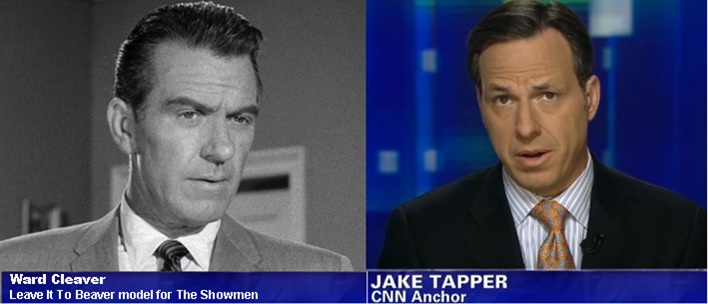
Trumping Alinsky pt 1 - Ward Cleaver meets Al Bundy

Have you wondered how it is, that the pro-regressive's best tried and true tactics, tactics that have proven so highly effective at hamstringing their targets over the course of the past 50+ years, have suddenly begun to fail them so publicly? And although, so far, they've been unable to lay a solid glove, or even a lasting tweet, on Donald Trump (and no, second hand rumors of Russians do neither), he's hardly the only example, just the most persistent day to day one. Think Brexit, Trump, the body slamming Montana maniac, Rep. Gianforte, or James Comey being fired, or James Comey leaking his own memos, or James Comey attempting to sabotage Trump, and fingering former Attorney General Lynch, instead, which even Chris 'thrill running up my leg!' Matthews had to admit, has made their entire Russian angle, go bust.

What's up with that?

If you wonder on that long enough to ask some questions, and long enough to move on from those initial questions, to still other questions (and I do mean questions, mind you, not merely doubts), you might find that they will bring you face to face with some interesting clues and questions, which, if you're willing to follow them, will lead you into taking a closer look at who it is that we, and you, are. True, they might not provide the full answer, and what they do provide, might be a little unsettling, but the clues are at least easy enough to find, and to follow, and, as the examined life is not worth spinning, you might as well.

Right?

For instance, to give you a clue just how easy it is to find these clues, just turn on the News. Take a look at the media spokespeople who're telling you what's going on - man, woman, Maddow, local, network, web or cable - it doesn't matter, just take a look, and then ask yourself this question:
'Does the way that these news sources communicate to you - not what they communicate, but how they present themselves and the way they present their information - seem to you to be normal for this day and age?'
With one or two rare exceptions, which prove the rule, the answer to that will be: No. And I'll betcha that if you ask yourself what group, place, or time period, that they do remind you of, I'll bet that the 'when' in time that they remind you most of, is some sort of throwback to the 1950's, maybe early 1960's.

Don't they?

And the answer to why that is, is a big clue to why Trump is winning. And yes, he, at least, is still winning. Even now. And you don't need to be a Trump supporter - I'm certainly not (and by that I only mean that he has no history of displaying the manner and commitment to ideas, that I can support) - in order to see this; it's just right out there in the open, if you open your eyes and look.

Those that we are in the habit of looking to, for information about our world, look like they do, because the media, Left, Right and center, have consciously formed themselves from a template derived from a 1950's 'Leave it to Beaver!' world of Ward Cleavers - as have the more popular means of manipulating (or attacking) the world we perceive around us.

Just look at what is deemed to be 'edgy' today - think Vagina costumes and pink pussy hats. They're only conceived of as being 'edgy', in relation to those things that would shock that old 'Leave it to Beaver' world view - do such fashion choices shock the generations raised in a world of 'South Park' or 'The Simpson's'? I'm gonna say, nope - in fact, they're far more likely to laugh at and mock it (another big clue).

Nope, the stuffed shirt shock and outrage of the estab...but no, 'establishment' doesn't quite cut it.

Monday, May 29, 2017

Memorial Day - Remembering those of our Military who did not learn not to

Memorial Day - Remembering those of our Military who did not learn not to
My friend Jimi posted a video of a video portion of President Reagan's First Inaugural Address that's highly fitting for Memorial Day, and while I'd heard it before, somehow I'd missed that part of what he was reading, the most moving part, was from an inscription that a soldier who died in WWI, Private Martin A. Treptow, had made in his journal. Treptow wasn't a philosopher or a teacher or any sort of 'intellectual', he was a person who worked in a barber shop who simply understood that what he valued was worth, and required, defending.

What has become known as 'Treptow's Pledge', comes from the flyleaf of his diary:
"My Pledge: America must win this war. Therefore, I will work, I will save, I will sacrifice, I will endure, I will fight cheerfully and do my utmost, as if the issue of the whole struggle depended on me alone."
Remarkable. However what might be most remarkable of all, is that in our world today, such a pledge seems remarkable to us, whereas for Treptow, a barber from a century ago, he considered it to be a simple matter of course, a simple truth that was worth reflecting upon in his diary, so that he could get on with carrying it out.

Remember today those who put their lives on the line for this nation, and in the course of doing so, lost them.

Reflect on what it is about America that could, and should, inspire such ideals, and on the Consitution which those we memorialize on this day, swore their lives to defend.

Consider also why it might be that such pledges might seem unusual to us today. As in a different context, a person being interviewed for his heroic actions replied to the question of how a person learns to willingly risk their life for another, the puzzled hero replied:
"How does he learn not to?"
Remember today, and give a moment's thanks, to those of our United States Military who lost their lives in service to their nation, because they did not learn not to.

Wednesday, May 17, 2017

Civics Classes, and a Future Past

Recently, the actor and sometimes leftist activist, Richard Dreyfuss, was interviewed on Tucker Carlson's show, and as you may have seen, or heard snippets of, or at least heard about, Dreyfuss soundly denounced the 'Antifa' activists who've been using violence on campus, to squelch people's ability to freely speak and associate. Kudos to Dreyfuss on that. But. For those of you on the Right, who are enthusing "Wow! There's a sensible Leftist that we can get behind!", please, for once, slow down a bit. While I too like the sound of much of what Dreyfuss says in this video - particularly his call to engage in the 'Battle of Ideas' in open discussions, and of course his call of 'Let's get back to the constitution and the Bill of Rights!', it is well worth remembering that what we think we are hearing, isn't always what the speaker meant for us to be hearing, and that what was actually meant (or will inevitably follow, despite their best of intentions), will often turn out to be something that we really do not want to hear, let alone experience.

That very situation, is, of course, what a good discussion should ideally expose and clarify for those in the conversation - but that cannot happen, if we, as we too often do, assume that their words, are said with our meaning, and so we, especially those on the Right, don't ask, don't check, don't clarify, what was meant - and so we are continually blindsided when their actual meaning is put into action. Ya know, for a group that's so fixated on the need to improve their messaging, you'd think that they'd notice that 'Wuht?! How did this happen?!', isn't a particularly attractive message to be habitually messaging from your group.

What sort of words could I mean? Well, words, for instance, such as the 'Civics' that Dreyfuss said he wants to see us getting back to,
“Civics has not been taught in the American public school system, since 1970…”
'Civics' is a word that sounds very significant. And our schools' lack of such a class - which is intended to be 'the training of students for democracy' (hmm) - sounds like a shocking situation, and a very sensible concern (although, as I, sadly, had to sit through the drudgery of Civics classes in 1972-74, in a Las Vegas public school at "Hyde Park Junior High", his blanket statement is at least questionable). But before we on 'The Right' go backing up his call, we should remember that the 'Civics Education' which he most likely wants to see, came from a concept of civics classes, that was once among the first of those 'bold, innovative thrusts' promoted by the education industry, from the opening of the 20th century, on. Such Civics classes were a particular favorite of 'educational reformers' such as John Dewey, who, for what he thought were very good reasons, was very big on pragmatically abandoning our past, and our traditional reverence for Truth, as well as the idea of 'the training of students for democracy' (isn't putting the 'training' of students in political views, into the hands of a government institution, even a trifle concerning?), so as to do 'what works', in order to take America 'into the future!'.

Maybe it's just me, but doesn't it occur to anyone else, that it's quite possible that the current situation we find our educational system, and our society, to be in, is a result of those very Civics classes, which Dreyfuss is advocating for us to engage in? Again?

Are we really going to blindly accept, that what we assume they mean by that word, is such a good thing for us to want to 'get back to' engaging in? Again? Perhaps, rather than seeking to get back to their future in civics, we should take a little time to consider what teaching Civics, as we once did, does, to a students understanding of civics, and to their understanding of individual rights, and to their understanding of the role of government within that society, that they are soon to become the future civic members and leaders, of?

One thing that both sides should be clear on, is that what we think we hear when we hear the word 'Civics', is highly unlikely to be what the other side means by it, because there exists among us such vast differences of opinion on political philosophy. We don't simply have differing perspectives on

Thursday, May 11, 2017

Why is America fired up over President Trump telling Comey: "You're fired!"

If you've had it already with the 'James Comey fired from the FBI!' stories, I get it, but as no one seems to have any more facts than I do, I'm going to add one more comment to the mix.

Do try to recognize, that asking and answering 'Why did Trump fire James Comey?!', is, in absence of an exhaustive cross examination of Donald Trump, nothing more than an exercise in expressing your own feelings about Trump, and Comey. Period.

The only facts that we can actually know at this time, is that shortly after the Deputy Attorney General, Rod Rosenstein, was finally confirmed by the senate, with high bi-partisan support (and which satisfied some procedural protocols for removing the agency director, from a staffing perspective), and he was asked to write a report on Comey's status as director of the FBI, and his conclusion (which as he adamantly expressed, even reportedly threatening to resign if it was misrepresented[OOPS: reportedly, that 'reportedly' is fake news. STUNNER], was not the causal reason for Comey's firing, but simply an evaluation of the existing situation) was that Comey was compromised and ineffective, and that the FBI would be better off with a new director.

Of course, as I posted last year, Comey, by his own testimony, had used his position as head of investigations, to make prosecutorial, and even judicial judgments, about whether charges should be brought or pursued, against Hillary, Huma Abedein, Anthony Wiener, etc. For me, that alone warranted his instant termination. My own question on why Trump fired him, is not 'Why now?' but 'Why not earlier?'. However, as James Comey himself noted in his farewell letter, the president has the power and authority to fire the director of the FBI at any time, for any reason. You should note, that his removal does not halt or impede any ongoing investigations. It's also worth noting, that his temporary replacement as Director of the FBI, Andrew McCabe, is a Clinton appointee, who has shown, especially through his wife's campaigning for office a potential for highly partisan leftist leanings - Trump is unlikely to get much aid and comfort through his position as director, so do tailor your pet conspiracy theory appropriately.

Why did Trump fire him? Because he felt it was time to. And in typical Trump fashion, having reached that decision, he acted swiftly, and in a dramatic fashion worthy of Reality T.V. - Comey found out that he'd been fired while standing in front of a room full of FBI agents, as they saw that the TV monitor behind him, was running the news crawl that Trump had fired him. Talk about your ratings moment!

For those of you who are all up in arms about this, honestly, I can only laugh and shake my head. America as a whole, Left, Right, Center and Libertarian, has shown itself to be uninterested in, and unfamiliar with, the concepts of, and structures of, our constitutional republic, preferring popularity, personal interest, and 'gotcha!' partisan political posturing, to prudent wisdom in governing. America, sorry, but as you clearly prefer to be entertained by the likes of South Park, The Simpsons, and Reality T.V., and YOU voted on that basis, whether for Clinton, Trump or the also-ran obstructionists, for President of the United States of America.

THIS is what that looks like! What did you expect?! Personally, I expected much worse, and so far I've been pleasantly surprised with what Trump has, and has not, done in office - I was imagining much worse. I dislike his lack of understanding our constitutional principles, and especially his economic views, but despite your angst and caricatures, he has a long history of capable executive, management and administrative abilities, a fond regard for Americana, as well as a flare for drama and publicity, which he's honed through a decade or more of Reality T.V., and so far, he has used all of that to deliver above my expectations. Fingers crossed. Salt tossed over shoulder. Wood knocked.

For those whose reactions are dramatically different from mine, they might have been summed up best by Stephen Colbert's startlement at his audience's failure to be up to speed with the PC Media's latest 'against him, for him, against him' positions on Comey, as they cheered when he announced his firing. The thing that came to mind for me, when I heard that, was George Orwell's '1984', as the crowd is being led in 5 minutes of hate against "Eurasia", and the speaker receives a message and stops mid word, and changes to "Eastasia", as the hate continues on unimpeded. Unfortunately, Wiki is the best source ref that I can do at the moment, but I think it captures the Colbert moment in '1984':
"At the start, Oceania and Eastasia are allies fighting Eurasia in northern Africa and the Malabar Coast.

That alliance ends and Oceania, allied with Eurasia, fights Eastasia, a change which occurred during Hate Week, dedicated to creating patriotic fervour for the Party's perpetual war. The public are blind to the change; in mid-sentence an orator changes the name of the enemy from "Eurasia" to "Eastasia" without pause. When the public are enraged at noticing that the wrong flags and posters are displayed, they tear them down—thus the origin of the idiom "We've always been at war with Eastasia"; later the Party claims to have captured Africa."
Ladies and Gentlemen of America, if you disregard the concepts and principles and history that made this nation uniquely American, in favor of idle and base amusements, while giving political power over your lives, to people who have more regard for their own power, than your individual rights - what did you think would follow after that? Last year, the HBO series "Westworld" made masterful use of a Shakespearean nugget of a quote, from "Romeo & Juliet",
"These violent delights, have violent ends"
When you comment, and act, not from careful consideration, but simply to give swift vent to your passionate and emotional feelings, you transform yourself into the ideal audience for taking part in 'Hate Week', and lacking any solid conceptual foundation, you too will hardly skip a beat in venting your emotions, as the label of your hated enemy is switched, from one set of letters, to another... and seriously, why would you think such labels would have any more value or purpose, to those you've put in charge of running the show, than a red cape to a bull?

Again I've got to ask, America, what did you expect? SMDH.

Saturday, April 22, 2017

Earth Day: Comply, or be put six feet under it!

The underlying meaning of Earth Day, a day that was chosen to coincide with Vladimir Lenin's birthday, shouldn't be all that difficult to realize. The fact that one of its original promoters and first MC, was a fellow who later murdered his girlfriend and composted her body, shouldn't be all that shocking. Neither should it be shocking that its like minded enthusiasts openly populate groups such as 'Earth First', who advocate terrorism in order to halt industry, and who pine for an event that would 'reduce the population of the earth' by several billion lives; "Back to the Pleistocene!" is one of their slogans, and the ideal of gurus of theirs like Paul Shepard.

Neither should it be shocking that other like minded movements over the decades, have routinely promoted crisis hysteria fads, that have come and gone, and come back again, from 'Silent Spring of DDT!', to 'acid rain!', to a 'population bomb!', 'vanishing oil!', 'new ice age!', 'the ozone hole!', 'global warming!', 'global cooling!', 'climate change!', 'Go Green!', etc - they all seek to link the loss of an apparent good, behind the cover of 'science!', so as to attain unrestrained political power, over as many people as they possibly can.

It's a tactic that's proven effective, from Robespierre, to Marx, Lenin, Stalin, Hitler, Mao, Pol Pot, Hugo Chavez, and the vast number of our current wannabes scurrying around on 'Earth Day' today. What it is all about, is putting a zealous few, into positions of overwhelming power over the many, so as to live our lives for us, in a manner which they anticipate will be satisfying to them.

When you see the heart tugging images, before succumbing to emotion, remember that what they all seek to do, and find common cause amongst themselves in doing, is sating their movement leader's own moral self satisfaction, through attaining the power to compel other people's thoughts and actions, to agree with, or else submit to, their own desires.

Nothing but evil can, or will, follow from that.

Friday, March 17, 2017

A question for 'REAL Conservatives'™

I've got a question for my 'REAL Conservatives'™ friends out there. While I've come to think of myself as more as more of a Liberal Conservative - Politically Liberal (Not Leftist, but Liberal in the classical sense of advocating for liberty), and culturally Conservative (not socially conservative, but seeking to conserve the ideals and treasures of Western Culture) - I like to think of myself as someone who has an understanding of the nature of Principles, to the point of preferring Principled thinking, over attempting to think with prefabricated store bought 'principles' (IOW I can get a bit obnoxious over it).

Between Scylla and Charybdis


I like to think of myself as someone who has an understanding of the nature of individual rights, the vital role that property plays in upholding them under a system of justice based upon the Rule of Law, which restrains and restricts the necessary power of government to defending the lives and rights of its people from all enemies, foreign and domestic. I've spent a lot of time thinking through how those abstract rights, follow from perceptual realities, in a conceptual chain that is perilous to abridge. And while I rarely find politicians who think as I do, I do seek out and support those who at least show a deep regard for our rights, for the rule of law, and the structure and purpose of our Constitution.

Given that focus, I couldn't find a way to support Donald Trump in the Primaries, because I didn't see any evidence that he understood, or gave much thought or regard, for what I did. I couldn't exactly support him in the general election either, although I strongly advocated for casting your vote, as I did, with his name on it, as the most effective means of defeating the greater evil facing us, from the Pro-Regressive Left.

My question for 'REAL Conservatives'™, is this: Why is it, that with all the 'REAL Conservatives'™ we've supported and elected over the decades, why is it that this billionaire, Twitter headed, Reality T.V. star, Donald J. Trump, is the ONLY one to propose the type of budget measures he has, the ONLY one who's moved to slay the Hydra of the Administrative State, the ONLY one who's used his executive powers to attack it, the ONLY one whose told the hell hole of North Korea that the era of 'strategic patience' is at an end, and the ONLY one to begin to pull back from the Charybdis of suck that is the United Nations?

That seems like a question that might be worth giving some thought to.

Tuesday, March 07, 2017

Dear GOP: To Repeal Is To Replace; to Replace Without Repealing Is To Suck

When it comes to the question of what to do about ObamaCare, there once seemed to be clarity on 'The Right': Repeal it. That was soon, slowly, altered to Repeal and Replace it. Why?

Andrew Breitbart once made a remark along the lines of,
'If you can't sell Freedom and Liberty, you suck.'
Dear GOP: You suck.
(And yes, I understand that there's a mirror out there waiting for me)
I am forced to say that, because, if you do understand Liberty, Individual Rights, the Constitutional Rule of Law, then you'd also understand that "Full Repeal", IS to replace ObamaCare with the most superior option available: being at liberty to find the services, care, associations, charities, to be offered and chosen, in a free market.

There IS no better option available than that. There is no more moral system available, there is no more inclusive system available, and there is no more efficient system available. To give 'careful consideration' to all other available options, is to not understand the best available option!

The blatantly obvious, and supremely depressing fact is, that 'The Right' in general, and the GOP in particular, do not fully understand this, and so they have little enthusiasm or commitment to, capital "L" Liberty. Sure they like the sound of it, it has marketing utility for them, but they do not 'get' it, and so they can't sell it, and worse, Americans as a whole are obviously not clamoring for it, or the politicians would at least put more effort into faking it.

To recap: Repealing ObamaCare IS replacing it with a vastly superior option - the Liberty to act in a Free Market - and going any further with tweaking regulations, adding laws, manipulating taxation, forcing options and 'choices' upon patients, doctors, insurers and other providers, is restoring all of the essential evils that was, and is, inherent in Obamacare.

Worse than simply sucking at selling Freedom and Liberty, is not even trying to. Despicable.

Note: I'm disgusted with Paul Ryan & Congress on this, not Trump. Trump at least ran on this muck, he's doing what he promised to. Paul Ryan & Congress are the dishonest pukes who've pretended to be against this, have pretended to understand why this should be opposed, and yet have written and proposed this.

For my friends on the Right, a far more important question than the spastic 'How was Trump elected?!', is 'Why is this being accepted?', and until that is understood, your complaints about Trump, RINO's and the Left, are pointless.

(Libertarians: pipe down and keep your two cents, most of you suck just as bad or worse at it.)